
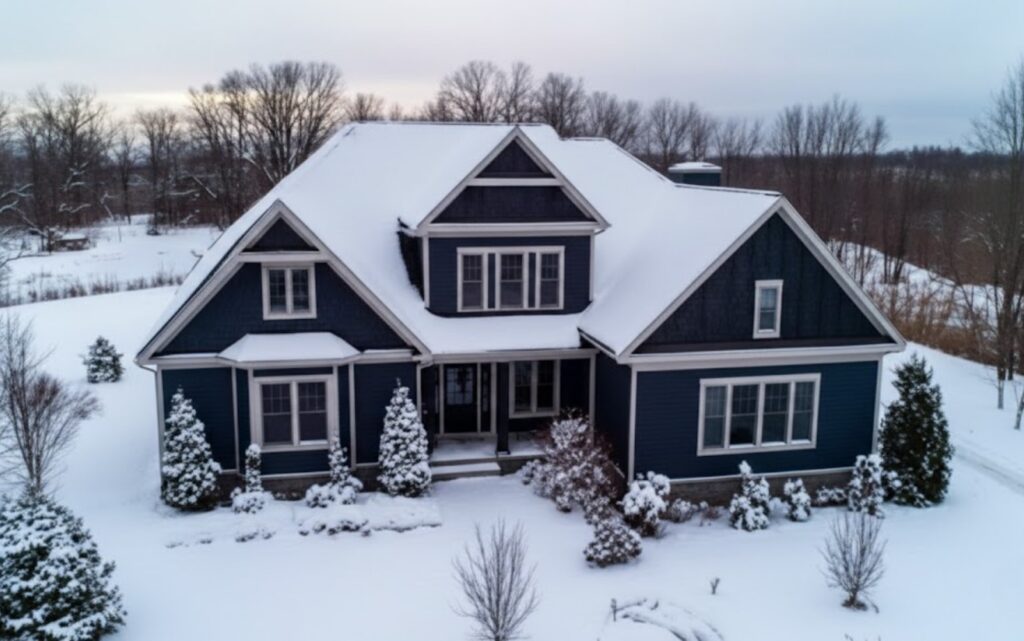
In the premier neighborhoods of Oakland County, property exteriors are subjected to a brutal cycle of environmental stress. From the heavy lake-effect snow of winter to the intense UV exposure and humidity of summer, the materials protecting a building are constantly expanding and contracting. For those managing properties in the area, understanding the specific impact of local weather is the first step in maintaining structural integrity and long-term value. Investing in high-quality materials and professional engineering is the only way to ensure a home remains resilient against these local climate challenges.
The Impact of the Michigan Freeze-Thaw Cycle
The most destructive force for any exterior in Southeast Michigan is the relentless freeze-thaw cycle. During a typical winter day, sun exposure may melt snow on the roof or siding, allowing water to seep into small gaps or behind panels. When temperatures drop after sunset, this water freezes and expands with immense force.
Over time, this process can pry siding panels away from the wall or cause brittle materials to crack. If you notice panels that look loose or “pushed out,” it is a sign that moisture has compromised the system. In these instances, siding repair Bloomfield Hills & Township is essential to seal the envelope before water reaches the wooden sheathing and causes internal rot.
UV Degradation and Thermal Expansion
While winter is harsh, summer brings its own set of problems. High-intensity UV rays can cause standard vinyl siding to fade unevenly and become brittle over time. Furthermore, dark-colored siding absorbs significant heat, leading to thermal expansion. If the original installation was too tight, the panels will have no room to move, resulting in unsightly warping or “oil canning.”
To combat this, local siding installers Bloomfield Hills now recommend materials like fiber cement or advanced insulated vinyl. These products are engineered with superior thermal stability and UV-resistant coatings that maintain their color and shape even during the most humid July heatwaves.
The Danger of High-Wind Storms
Oakland County frequently experiences severe thunderstorms with high wind gusts that can strip siding panels right off a building. This is often a result of “wind uplift,” where air gets behind a loose panel and creates a vacuum effect.
A professional siding installation Bloomfield Hills Township focuses on securing the “wind load” of the building. This includes using reinforced nail hems and ensuring that every panel is locked securely into the one below it. If your home has experienced storm damage, seeking an assessment from an exterior siding contractor Oakland County can help identify if your current system is rated for the wind speeds common to the region.
Humidity and the Risk of Mold
Michigan’s humidity can lead to the growth of algae, mold, and mildew on the shady sides of a house. While this may look like a simple cleaning issue, it often indicates that moisture is being trapped against the house. High-performance siding replacement Bloomfield Hills projects incorporate advanced house wraps and rain screen systems. These components create a “drainage plane” that allows moisture to escape rather than sitting against the wood, preventing the rot that often plagues older Bloomfield properties.
Choosing the Right Partner for Climate Defense
Selecting siding contractors Bloomfield Hills MI requires looking for specialized local expertise. A contractor who understands Oakland County weather won’t just offer a “quick fix.” They will look at the entire exterior system—including gutters, flashing, and insulation—to ensure the new siding performs as intended.
Prime Home Remod specializes in these high-performance exterior systems. As an experienced exterior siding contractor Oakland County, we prioritize:
- Thermal Bridging Mitigation: Adding rigid foam insulation during a replacement to lower utility costs.
- Precision Flashing: Protecting windows and doors from driving rain.
- Local Code Compliance: Ensuring every project meets or exceeds the strict building standards of Bloomfield Hills and the surrounding Township.
Frequently Asked Questions
Why is my siding warping in the summer?
Warping is usually caused by thermal expansion. If your siding installation Bloomfield Hills Township was done too tightly, the panels cannot move as they heat up, causing them to buckle.
How often do I need siding repair Bloomfield Hills & Township?
You should have your siding inspected at least once a year, preferably after winter, to check for cracks or loose panels caused by ice and snow.
What is the most durable siding for Michigan weather?
Fiber cement (such as James Hardie) is highly recommended by siding contractors Bloomfield Hills MI because it is fire-resistant and does not expand or contract like vinyl.
Can new siding help lower my cooling bills?
Yes. Modern siding replacement Bloomfield Hills often includes an insulation layer that prevents heat from transferring through the walls into your home.
Is mold on my siding dangerous?
While mold on the surface is a cleaning issue, it often suggests that moisture is trapped. A local siding installers Bloomfield Hills expert should check to ensure water isn’t getting behind the panels.
Does wind damage require a full replacement?
Not always. If the damage is localized, an exterior siding contractor Oakland County can perform a targeted repair. However, if the siding is old and brittle, replacement is safer.
What is “hail-resistant” siding?
This typically refers to fiber cement or reinforced vinyl that has a higher impact rating, making it less likely to crack during a severe storm.
How long does a typical siding installation take?
Most residential projects in Bloomfield Hills take between 1 and 2 weeks, depending on the material and the size of the structure.
Why should I hire a local siding contractor?
Local siding contractors Bloomfield Hills MI are familiar with the specific building codes and the unique “lake effect” weather patterns of the area.
What is a “house wrap” and why is it important?
A house wrap is a weather-resistant barrier installed under the siding. It allows water vapor to escape while preventing liquid water from entering, which is critical for preventing rot in Michigan.

