When most homeowners think about their roof, they picture shingles. That makes sense. Shingles are what you see. But there’s a hidden part of your roof system that works just as hard, and most people never think about it: your attic.
Attic ventilation and insulation quietly control how long your shingles last, how much you pay to heat and cool your home, and whether you’ll deal with leaks, mold, or ice dams this winter. If you’ve been searching for a roofing contractor near me in Fenton, MI, this is one topic worth understanding before you make any decisions about your roof.
What Does Attic Ventilation Actually Do?
Your attic isn’t just space under your roof. It’s a system. Warm, moist air rises from your living space into the attic. If that air has nowhere to go, it gets trapped. Trapped heat and moisture cause a chain reaction of problems that most homeowners only notice once the damage is already done.
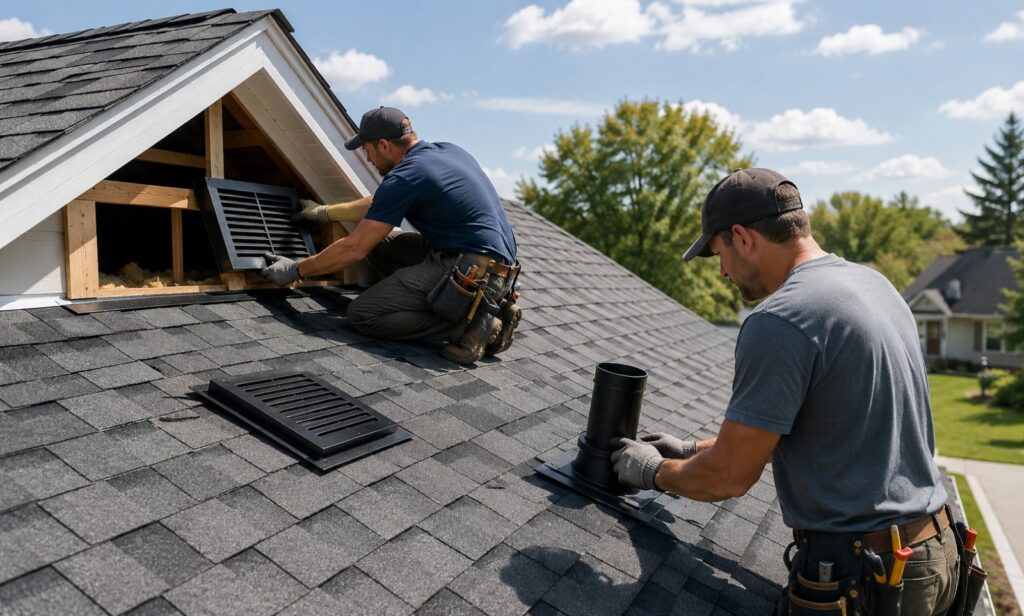
Good attic ventilation moves air in and out of your attic using a combination of intake vents (usually at the soffits, under the roof eaves) and exhaust vents (usually at or near the ridge, the top of the roof). Air flows in low, moves across the underside of the roof, and flows out high. This keeps the attic close to the outside temperature year-round.
How Poor Ventilation Shortens Your Roof’s Life
Here’s what happens when an attic can’t breathe properly:
- Shingles overheat. In summer, a poorly ventilated attic can climb well past 150°F. That heat bakes your shingles from underneath, causing them to crack, curl, and age faster than they should.
- Moisture builds up. In winter, warm, humid air from inside your home rises into the attic and condenses on the cold underside of the roof deck. Over time, this moisture soaks into the wood, leading to rot, mold, and a weakened roof structure.
- Ice dams form. This is a big one for Michigan homes. Heat escaping into a poorly insulated, poorly ventilated attic melts snow on the upper roof. That melted snow runs down and refreezes at the colder eaves, forming a dam of ice. Water then backs up under your shingles and into your home.
Any roofer in Fenton MI who’s been doing this work for a while can tell you: a huge number of “surprise” roof problems actually start in the attic, not on the shingles themselves.
Insulation Is the Other Half of the Equation
Ventilation and insulation work as a team. Insulation keeps the heat from your living space where it belongs, inside your home, instead of leaking up into the attic. Without enough insulation, your attic stays warmer than it should, even with good ventilation. That warmth is exactly what melts snow and feeds ice dams.
The two most common signs your attic insulation isn’t doing its job are:
- Uneven snow melt on your roof (patches melting faster than others)
- Rooms in your home that are hard to keep warm or cool, no matter what the thermostat says
If either of these sounds familiar, it’s worth having your attic checked before you invest in residential roof replacement in Fenton, MI. Sometimes the roof itself is fine, and the real problem is what’s happening underneath it.
Signs Your Attic Ventilation Needs Attention
You don’t need to climb into your attic with a flashlight to catch the warning signs. Watch for these from the outside and inside your home:
- Icicles or ice buildup along the edge of your roof in winter
- Musty smells in upper rooms or closets
- Visible mold or dark staining on the attic roof deck
- Shingles that look curled, cracked, or unevenly worn
- Higher than normal heating and cooling bills
- Peeling paint or stains on exterior walls near the roofline
Catching these signs early can save you thousands of dollars. A roof that fails because of attic moisture and heat damage often needs full replacement years before it should.
Why This Matters More in Fenton, MI
Fenton sees the full range of Michigan weather: hot, humid summers and cold, snowy winters. That swing puts extra stress on attic ventilation systems that aren’t built or balanced correctly. A roof that might last 25 years with proper airflow can lose several years of life to poor ventilation alone.
This is why residential roofing in Fenton MI should always include a look at the attic, not just the shingles on top. A roof is a system. Treating only one part of it is like changing your oil but never checking the rest of the engine.
How Prime Home Remod Can Help
At Prime Home Remod, we don’t just replace shingles and walk away. Every roofing inspection we do includes a look at attic ventilation and insulation, because we want your new roof to actually last as long as it’s supposed to. Founded by Josh Kroll, a third-generation builder, our team has spent years helping Michigan homeowners protect their biggest investment from the ground up, not just the top down.
Whether you need a full inspection, a ventilation upgrade, or a complete residential roof replacement in Fenton, MI, our team will walk you through exactly what your roof and attic need, with no guesswork and no upselling you don’t need. We also offer flexible financing options, so you can get the work done now and pay later.
If you’ve been searching for a roofing contractor near me in Fenton, MI, reach out to Prime Home Remod for a straightforward, honest evaluation of your roof and attic system.
Frequently Asked Questions
Does attic ventilation really affect how long my roof lasts?
Yes. Poor ventilation traps heat and moisture, which can cause shingles to age faster, wood to rot, and ice dams to form in winter. Good airflow keeps your attic closer to outside temperatures and protects your roof from the inside out.
How do I know if my attic has enough ventilation?
Common warning signs include ice buildup on the roof edge in winter, musty smells in upper rooms, visible mold on the attic roof deck, and shingles that look worn or curled. A professional inspection can confirm exactly what’s going on.
Can better attic ventilation lower my energy bills?
Yes. When your attic is properly insulated and ventilated, your home holds heat and cool air more efficiently, which means your furnace and air conditioner don’t have to work as hard.
Do I need to replace my whole roof to fix ventilation problems?
Not always. Sometimes adding or upgrading vents and improving insulation is enough. A full replacement is usually only needed if the roof deck or shingles have already suffered damage from years of poor airflow.
How often should attic ventilation be checked?
It’s a good idea to have your attic checked once a year, ideally before winter, and any time you notice ice dams, high energy bills, or signs of moisture damage.

