
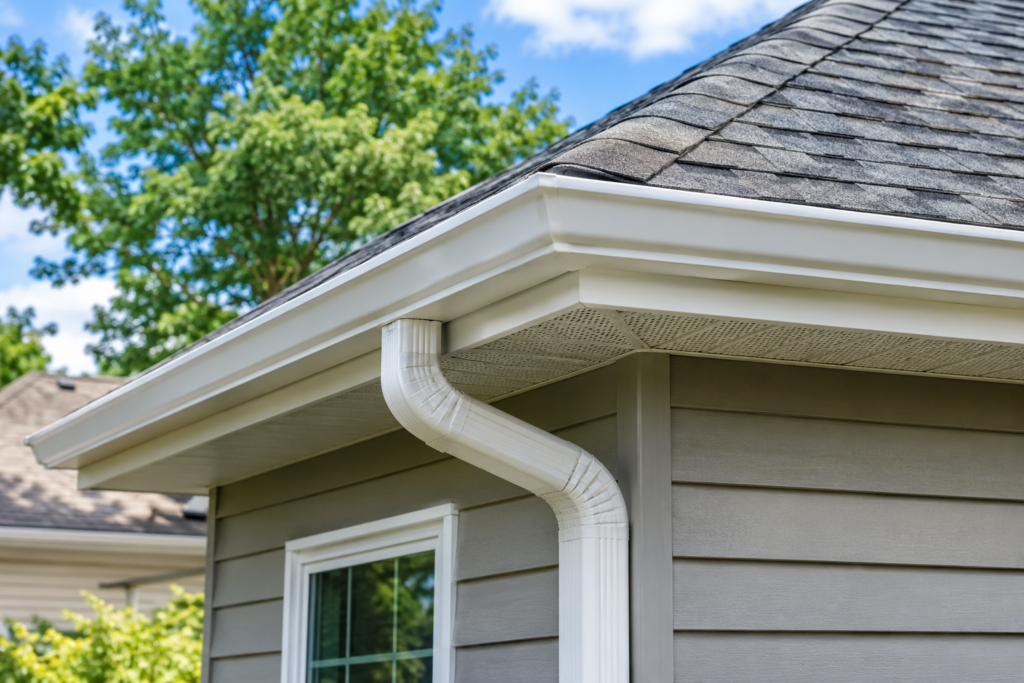
Choosing the right gutter size may seem like a small decision, but it can make a big difference in protecting your home. Gutters collect rainwater from your roof and move it away from your walls, landscaping, and foundation. If they are too small, they may overflow during heavy rain. If they are too large for your home’s needs, you may spend more money than necessary.
Two of the most common residential gutter sizes are 5-inch and 6-inch gutters. Both can work well, but they are designed to handle different amounts of water. The right choice depends on your roof size, roof slope, rainfall, and the number of downspouts.
For homeowners researching gutters Rochester mi, understanding these differences can help you make a better decision before installing or replacing a gutter system.
This guide explains how 5-inch and 6-inch gutters compare, when each size makes sense, and what Rochester Hills homeowners should consider before choosing a new system.
What Is the Difference Between 5-Inch and 6-Inch Gutters?
The main difference between these two gutter sizes is their width and water-handling capacity.
A 5-inch gutter is a common choice for many residential homes. It works well with many standard roof designs and can handle normal rainfall when installed correctly.
A 6-inch gutter has a wider opening and can collect more water. It is often used on homes with larger roof surfaces, steep roof slopes, or areas where water flows quickly toward the roof edges.
Here is a simple comparison:
| Feature | 5-Inch Gutters | 6-Inch Gutters |
| Width | 5 inches | 6 inches |
| Water capacity | Standard | Higher |
| Common use | Many residential homes | Larger or more demanding roof areas |
| Appearance | Smaller profile | Slightly larger profile |
| Cost | Usually lower | Usually higher |
| Maintenance | Requires regular cleaning | Also requires regular cleaning |
| Best for | Standard drainage needs | Higher water volume |
A 6-inch gutter can generally handle more water than a 5-inch gutter, but the actual performance depends on its shape, slope, outlet size, and downspout arrangement.
Neither option is automatically better for every house. The goal is to choose a system that matches your home’s drainage needs.
When Are 5-Inch Gutters the Right Choice?
Five-inch gutters are widely used on residential properties because they offer a good balance of performance, appearance, and cost.
For many homes with standard roof sizes and moderate drainage needs, this size is enough to collect and move rainwater away from the property.
Benefits of 5-Inch Gutters
- Lower Installation Cost
Five-inch gutters generally cost less than 6-inch systems. The smaller size can help reduce material expenses, making them a practical choice for homeowners working with a budget.
- Suitable for Many Residential Roofs
Homes with standard roof designs often do not need oversized gutters. When the roof area, slope, and downspouts are properly matched, 5-inch gutters can provide reliable drainage.
- Traditional Appearance
The smaller profile may blend more easily with certain home styles. Homeowners who want a simple gutter system without a larger appearance may prefer this option.
- Wide Availability
Five-inch gutters are a common residential option. This makes it easier to find suitable materials, accessories, and replacement parts.
When Should You Choose 5-Inch Gutters?
Consider 5-inch gutters if:
- Your home has a standard roof size.
- Your roof has a moderate slope.
- Your existing gutter system drains properly.
- You do not experience frequent overflow.
- Your downspouts can handle the expected water flow.
However, a smaller gutter may not be the best choice if your roof collects a large amount of rainwater in a short period.
When Are 6-Inch Gutters a Better Option?
Six-inch gutters provide additional space for collecting and moving water. They are often a better choice for homes with large roof sections or areas that experience heavy runoff.
During strong rainstorms, water can move quickly down a steep roof. A larger gutter gives that water more room to enter and flow toward the downspouts.
Benefits of 6-Inch Gutters
- Greater Water Capacity
The wider opening allows 6-inch gutters to collect more water than standard 5-inch gutters. This can help reduce overflow when a roof produces a high volume of runoff.
- Better for Larger Roof Areas
Large homes and buildings often have roof sections that collect substantial amounts of rainwater. A 6-inch system may provide the additional capacity needed to manage that flow.
- Helpful for Steep Roofs
Water moves faster down steep roofs. A larger gutter can provide more room to catch the runoff before it passes over the edge.
- More Room Around High-Flow Areas
Some roof sections direct water into a single gutter area. A wider system may help manage these concentrated water flows when properly designed.
When Should You Choose 6-Inch Gutters?
Six-inch gutters may be worth considering if:
- Your home has a large roof area.
- Your roof has steep slopes.
- Your current gutters overflow during heavy rainfall.
- Several roof sections drain into one area.
- You have experienced repeated drainage problems.
Keep in mind that a larger gutter does not solve every water problem. Poorly placed downspouts, incorrect gutter slope, and blockages can still cause overflow.
How Rochester Hills Weather Affects Gutter Size
Weather is an important factor when choosing a gutter system. Rochester Hills experiences changing seasons, including spring rain, summer storms, falling leaves, and winter snow.
Each season creates different drainage challenges.
Heavy Spring and Summer Rain
Strong rainstorms can send large amounts of water down your roof in a short time. If your gutters cannot collect the runoff quickly enough, water may spill over the sides.
A properly sized 6-inch system may help homes with larger roof areas handle this increased water flow.
Fall Leaves and Debris
Michigan homeowners also deal with falling leaves during autumn. Leaves, small branches, and other debris can collect inside gutters and block water movement.
Both 5-inch and 6-inch gutters need regular cleaning. A larger gutter may offer more room, but it does not eliminate the need for maintenance.
Winter Snow and Ice
Snow and ice can create additional stress on gutters. When snow melts and refreezes near the roof edge, ice buildup may interfere with drainage.
Proper installation, secure gutter supports, and good roof drainage are important during Michigan winters.
The right gutter size should account for these seasonal conditions rather than focusing only on the width of the gutter.
What Factors Determine the Right Gutter Size?
Choosing between 5-inch and 6-inch gutters requires more than measuring the roofline. A professional should consider several factors before recommending a system.
1. Roof Size
The larger your roof, the more rainwater it can collect. A small roof section may work well with 5-inch gutters, while larger sections may need 6-inch gutters.
The amount of roof area draining into each gutter section is especially important.
2. Roof Pitch
Roof pitch refers to how steep your roof is. Steeper roofs allow water to travel toward the gutters more quickly.
This faster flow can increase the demand on your drainage system.
3. Roof Design
Some homes have several roof sections that meet at valleys or corners. These areas may send water into specific parts of the gutter system.
A professional should check these locations to determine whether larger gutters or additional downspouts are needed.
4. Downspout Size and Placement
Gutters need properly sized downspouts to move collected water away from the roof.
Even a 6-inch gutter can overflow if it connects to too few downspouts or if the outlets are too small.
The location of downspouts also matters. They should be placed where water can drain efficiently and safely away from the foundation.
5. Budget and Long-Term Value
A 6-inch gutter system may have a higher upfront cost, but it could be a better investment if your current system cannot handle the roof’s water volume.
On the other hand, installing larger gutters when they are not needed may increase project costs without providing much additional value.
The best choice is the system that meets your drainage needs without unnecessary spending.
Signs Your Current Gutters May Be Too Small
Sometimes homeowners do not realize their gutters are undersized until they notice water problems around the house.
Here are some common warning signs:
Water Overflowing During Rain
If water spills over the gutter edges during storms, the system may not be collecting water quickly enough.
However, clogged gutters, poor slope, or blocked downspouts can cause the same problem.
Water Pooling Near the Foundation
Gutters should move water away from your home. If water collects near the foundation after rain, the drainage system may not be doing its job properly.
Water Stains on Siding
Overflowing gutters can send water down exterior walls. Over time, this may lead to stains, peeling paint, and moisture damage.
Sagging or Pulling Gutters
Gutters that pull away from the roofline may have loose supports, excess weight, or installation problems.
Repeated Drainage Issues
If you regularly experience overflowing gutters even after cleaning them, it may be time to have the system inspected.
A professional can determine whether you need larger gutters, additional downspouts, or another type of correction.
Should You Replace 5-Inch Gutters With 6-Inch Gutters?
Upgrading from 5-inch to 6-inch gutters can make sense when your current system struggles to handle rainwater.
However, replacement should be based on the actual drainage needs of your home.
For example, if your gutters overflow because they are too small for a large roof section, moving to a 6-inch system may help.
But if the problem comes from clogged downspouts, poor installation, or incorrect gutter slope, simply installing larger gutters may not fix it.
Before replacing your system, ask a professional to:
- Measure the roof sections that drain into each gutter.
- Check the roof slope and design.
- Inspect the existing gutter condition.
- Evaluate downspout size and placement.
- Look for signs of water damage around the fascia and foundation.
- Recommend the right gutter size for your property.
A complete inspection can help you avoid paying for a replacement that does not solve the original problem.
How to Find the Right Gutter Installation Service in Rochester Hills
Choosing the right contractor is just as important as choosing the right gutter size.
If you are searching for Rochester Hills gutter installation near me, look for a company that understands local weather conditions and residential drainage systems.
Here are a few things to consider before hiring a contractor:
Experience: Choose a contractor with experience installing and replacing residential gutter systems.
Proper Assessment: The company should inspect your roof and drainage needs before recommending a gutter size.
Quality Materials: Ask about gutter materials, durability, available colors, and installation methods.
Clear Estimates: Request a detailed estimate that explains the materials, labor, downspouts, and other project costs.
Warranty: Ask what product and workmanship warranties are available.
Homeowners comparing options for gutter installation Rochester Hill should also ask whether the contractor can check the fascia, gutter slope, and existing drainage problems during the installation process.
Taking time to compare contractors can help you find a system that performs well and protects your property for years.
Protect Your Home With the Right Gutter System
Choosing between 5-inch and 6-inch gutters comes down to your home’s size, roof design, and drainage needs. Five-inch gutters are a practical choice for many standard residential roofs, while 6-inch gutters may provide additional capacity for larger or steeper roof sections.
For homeowners researching gutters in Rochester, MI, the most important step is getting the right recommendation for the property instead of choosing a size based on price alone.
A properly installed gutter system helps protect your siding, landscaping, roofline, and foundation from water damage.
Get Professional Gutter Installation From Prime Home Remod
If your current gutters overflow during storms or no longer drain properly, it may be time to consider an upgrade.
Prime Home Remod provides gutter installation and replacement services for homeowners in Rochester Hills and nearby Michigan communities. The company was founded by Josh Kroll, a third-generation builder whose family brings more than 70 years of building experience.
Prime Home Remod offers gutter solutions designed around your home’s needs, including residential gutter systems, downspouts, and gutter protection options.
Whether you are considering 5-inch or 6-inch gutters, the team can help you explore suitable options for your property.
Contact Prime Home Remod to discuss your gutter installation or replacement project and take the next step toward better home protection.
Frequently Asked Questions
Are 5-inch or 6-inch gutters better for Rochester Hills homes?
Both sizes can work well. Five-inch gutters are suitable for many standard residential roofs, while 6-inch gutters may be better for larger roofs, steep slopes, or areas with heavy water runoff.
Do 6-inch gutters hold more water than 5-inch gutters?
Yes. Six-inch gutters generally have greater water-handling capacity because they have a wider opening. However, actual performance also depends on gutter design, slope, and downspout size.
Are 6-inch gutters worth the extra cost?
They can be worth the investment if your roof produces more runoff than a standard gutter system can handle. A professional assessment can help determine whether the added capacity is necessary.
Can I replace my 5-inch gutters with 6-inch gutters?
Yes. Many homes can be upgraded to 6-inch gutters. However, the installer should check the roofline, fascia, downspout placement, and other installation requirements before starting.
How often should gutters be cleaned in Rochester Hills?
Most homeowners should clean their gutters at least twice a year, usually in spring and fall. Homes surrounded by trees may need more frequent cleaning to prevent blockages.
Do larger gutters prevent clogging?
Larger gutters provide more space for water and debris, but they do not prevent clogs. Leaves, twigs, and other materials can still block the system. Regular cleaning and suitable gutter guards can help.
How do I know if my gutters are too small?
Frequent overflowing during rain, water running down exterior walls, and repeated drainage problems may indicate that your gutters are undersized. However, blockages and installation issues should also be checked.
How long does gutter installation take?
Many residential gutter replacement projects can be completed in one day. The actual time depends on the home’s size, roof design, gutter length, and project complexity.
What type of gutters work best in Michigan?
Aluminum gutters are a popular residential option because they are lightweight and resistant to rust. The best material depends on your budget, home design, and maintenance preferences.
How much does gutter installation cost in Rochester Hills?
The cost depends on gutter size, material, total length, downspouts, and installation complexity. A professional estimate is the best way to understand the cost for your specific home.

